
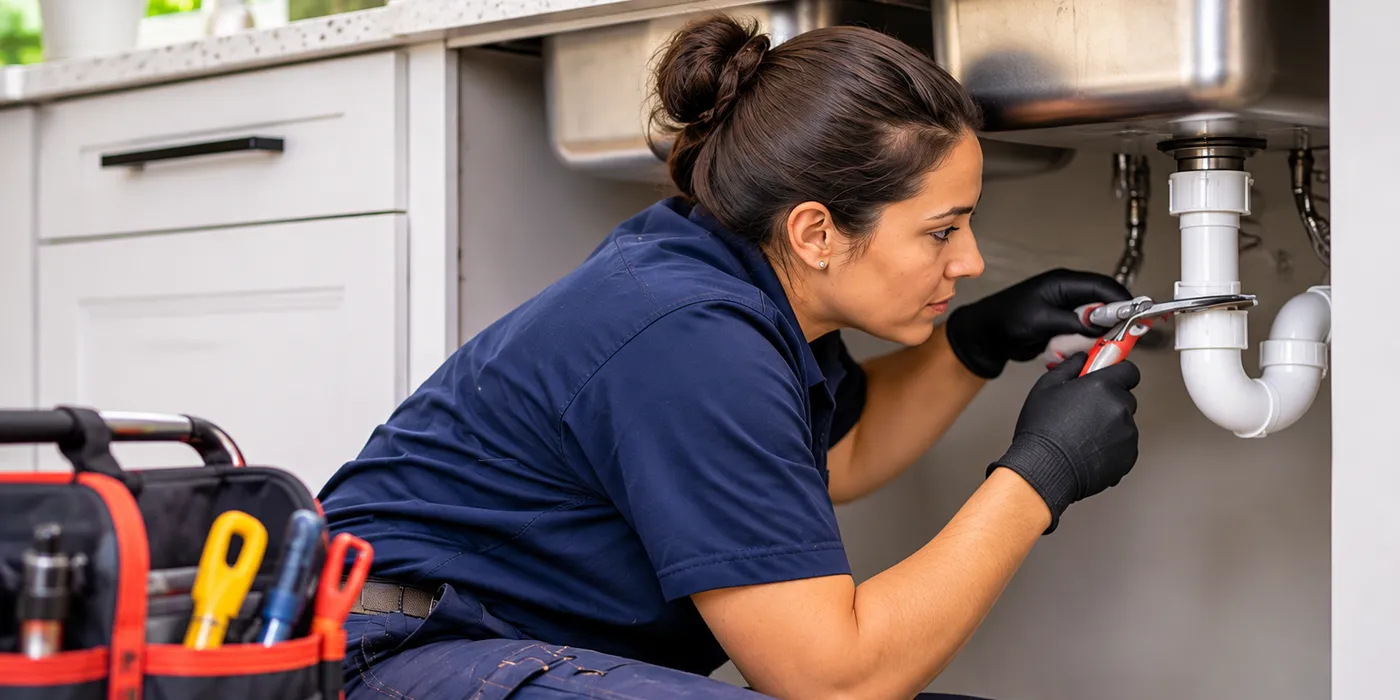
Leak Repair in Round Rock, TX
We locate and repair leaking pipes, valves, fittings, and fixture connections.
A drip under the kitchen sink can soak the cabinet floor slowly, then swell the particleboard around the supply valves and trap. A damp spot on a ceiling can spread beyond the pipe opening as water follows framing, insulation, and drywall. After a week or a month, a small leak may leave staining, peeling paint, warped flooring, or mold growth behind a wall.
We trace the water to the fitting, pipe, valve, or fixture connection that has failed instead of treating the visible stain as the source. A leak from an exposed compression nut may stay contained for a while, but a leak inside a wall, under a slab, or beneath a toilet needs attention sooner because water can keep moving through building materials. Leak repair should not wait when water is actively running, pooling, or reaching drywall, cabinets, flooring, or electrical fixtures.
Water stains and dripping pipes
Customers often call us about a brown ceiling spot, a pipe that keeps dripping under a sink, or water collecting around a shutoff valve. Others notice a wet cabinet base, a damp carpet edge near a wall, or a water meter that moves after every faucet and appliance has been turned off.
A hissing sound behind drywall can point to a pressurized water line, while a musty odor near a vanity or laundry wall can come from water that has sat in framing or insulation. Water around a fixture may also come from a loose supply connection, a worn seal, a cracked drain fitting, or a pipe joint farther behind the wall.
Those signs can look alike from the room, but the repair changes with the failed part and where the water has traveled. A visible valve connection, a pinhole in copper tubing, and a split fitting inside a wall require different materials, access work, and labor.
Leak inspection and pressure test
We begin the callout by checking the wet area, nearby fixtures, exposed supply lines, shutoff valves, and the water meter. We look for fresh water at joints, corrosion around valve stems, movement at compression fittings, and staining that shows the direction of the water path. We may also isolate a fixture or branch line before removing a cabinet panel or opening a small section of drywall.
We compare static and flowing water pressure, with residential plumbing commonly operating between 40 and 80 psi, and use the meter to help confirm ongoing water loss. A basic visible-area inspection and pressure check may take about 10 to 15 minutes before repair work begins. We replace accessible washers, supply lines, valve components, fittings, or damaged pipe sections during the visit when the part and access allow it; wall restoration, concealed pipe routing, or special-order parts may need a separate appointment.
Shutoff valves and wall access
The age and condition of the failed fitting affect the repair because older compression nuts, galvanized pipe, corroded copper, and brittle plastic connections can break or deform during removal. A shutoff valve that turns freely gives us a clean way to isolate one fixture, while a seized valve may require additional work at the branch line or main shutoff.
Access also changes the scope. A leak below an open sink cabinet usually gives us room for a wrench and replacement fitting, but a pipe behind tile, drywall, insulation, or a finished ceiling may require a careful opening to reach the joint. A matching valve cartridge, specialty fitting, or fixture-specific part that must be ordered can extend the repair beyond the first visit, and some pipe work may require inspection or sign-off before a wall closes.
Fixture model and wall access
Before calling, note which room has the leak and which fixture sits closest to the wet area, such as the upstairs bathtub, laundry washer box, kitchen sink, or bathroom vanity. If water comes from a faucet, valve, or appliance connection, check for a model number or make stamped on the fixture body, trim plate, supply hose, or appliance label. Tell us whether water is running now, dripping only after use, or showing up below the room where the fixture sits. Let us know whether the pipe is visible in a cabinet, crawl space, garage, or utility room, or hidden behind tile or drywall. Call BT Round Rock Plumbing at (737) 215-4933 before a leaking pipe keeps soaking the cabinet, ceiling, or wall framing.
When we are open
Outside these hours, leave a message and we will call back.
Next: toilet repair, or back to the home page.